
TYpes of Common Australian Termites
Termites are one of the most destructive pests in Australia, causing extensive damage to buildings, crops and forests every year. There are over 300 species of termites in Australia, but the most common are subterranean, drywood and dampwood termites.
1. Subterranean Termites: These are the most destructive termite species in Sydney and are known to cause significant damage to homes and buildings. They build their nests underground and travel to structures to feed on the cellulose in wood and other building materials.
2. Drywood Termites: This species of termites is known to infest structural timber in buildings, such as roof spaces, wall cavities, and window frames. They are less common than subterranean termites, but their damage can be just as significant.
3. Dampwood Termites: This species of termite is typically found in areas with high humidity and moisture levels, such as around leaky pipes and faulty guttering. They are less common in Sydney than other species, but can still cause significant damage to homes and buildings.
It is critcial if you see signs of termite activity to contact a professional immediately, once external signs are obvious there may be significant internal damage.
Common Species of Termites
Over 300 species of termites live in Australia, however, the ones listed below are the most common:
Termite Identification Guide
Coptotermes acinaciformis
Coptotermes acinaciformis is a species of subterranean termite commonly found in Australia. They are known to cause significant damage to wooden structures, including homes and buildings, as they feed on the cellulose in wood and other building materials.
C. acinaciformis has a dark brown to black color, and workers range in size from 3 to 6 millimeters. They build large underground nests and have the ability to create satellite colonies within structures, making them difficult to control. This species is considered one of the most destructive termite species in Australia accounting for more than 70% of the serious damage done to buildings.

Schedorhinotermes intermedius
Schedorhinotermes intermedius is often found in eastern NSW and south eastern Queensland. S. intermedius workers are brown in color, with a size ranging from 3 to 6 millimeters. They build large underground nests and forage for food above ground.

Mastotermes darwiniensis
Mastotermes darwiniensis is a species of termite that is commonly known as the giant northern termite.
The giant northern termite is known for its large size and distinctive appearance, with workers and soldiers that can reach up to 30mm in length. They have a reddish-brown to dark brown coloration and a distinctive head shape.
This species is considered a serious pest in Australia, as it is capable of causing significant damage to wooden structures and is known for its ability to destroy entire buildings.

Coptotermes frenchi
The workers of C. frenchi are tiny, measuring between 3 to 6 millimeters, and have a dark brown coloration.
These termites build large underground nests and forage for food above ground. They are known for their ability to form satellite colonies within structures, making it challenging to control their spread and resulting in extensive damage.
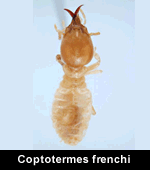
Image Credits: termite.com.au
Nasutitermes walkeri
Nasutitermes walkeri are an arboreal species commonly found on the east coast of QLD and NSW.
They have large distinctive nests usually built in a tree. This species is known for its distinctive appearance, with workers and soldiers that have a brownish-yellow coloration and a distinctive, rounded head shape.

Heterotermes ferox
Heterotermes ferox can be found in areas where timber is exposed to moisture. They prefer damp locations where wood is affected by weather. This includes fences, decks, flooring and posts.
They are mainly found throughout ACT, NSW, SA and WA.

it is important if you see signs of termite activity on your property to not disturb them. It is essential you call a qualified and professional pest controller to ensure that termites are removed from your house correctly.